
Retained Primitive Reflexes: What Science Reveals About Their Prevalence in Learning and Motor Disabilities

If your child struggles with coordination, balance, reading, or attention: or if you work with children who face these challenges: there's emerging science that might help explain what's happening. Research is revealing that retained primitive reflexes are far more common than we once thought, and they're significantly connected to both learning and motor difficulties.
As advocates for neurodiverse learners, we believe families and professionals deserve to understand this research. When we know better, we can do better: and that means exploring all the factors that might be impacting a child's development.
Understanding Primitive Reflexes
Primitive reflexes are automatic movement patterns that develop in utero and during early infancy. Think of them as the nervous system's training wheels: helping babies survive and develop in those crucial first months of life. The Moro reflex that causes a baby to startle and throw their arms out, or the rooting reflex that helps them find food, are examples most parents recognize.
Typically, these reflexes should naturally integrate (or "turn off") as the brain matures and higher-level motor control develops. But sometimes, they don't fully integrate. When primitive reflexes persist beyond their typical timeframe, we call them "retained primitive reflexes."

The Surprising Prevalence
Here's what might shock you: recent research shows that 89% of preschool children aged 4-6 years retain at least one primitive reflex. That's nearly 9 out of every 10 children. Only 11% of preschoolers showed no retained primitive reflexes at all.
The most frequently occurring retained reflex was the asymmetrical tonic neck reflex (ATNR), appearing in 66% of children studied. These aren't isolated cases or rare developmental quirks: retained reflexes are incredibly common in early childhood.
This prevalence data should give us pause. If nearly all young children are showing some level of reflex retention, we need to seriously consider how this might be impacting their development, learning, and daily functioning.
The Motor Connection
When we look at the relationship between retained reflexes and motor skills, the research paints a clear picture. There's a direct, inverse correlation: the greater the intensity of retained reflexes, the lower the child's motor efficiency.
In one comprehensive study, researchers found that among preschoolers with retained reflexes:
9% showed "altered" motor development
29% demonstrated "delayed" motor development
59% had "normal" development
Only 3% achieved "very good" motor performance
Children with retained primitive reflexes consistently showed reduced motor development skills in tasks like jumping sideways, ball-carrying activities, and placement accuracy. The specific motor challenges associated with retained reflexes include:
Decreased balance and coordination
Poor spatial awareness
Toe walking patterns
Joint hypermobility
Muscle weakness
Postural difficulties
Motion sickness sensitivity
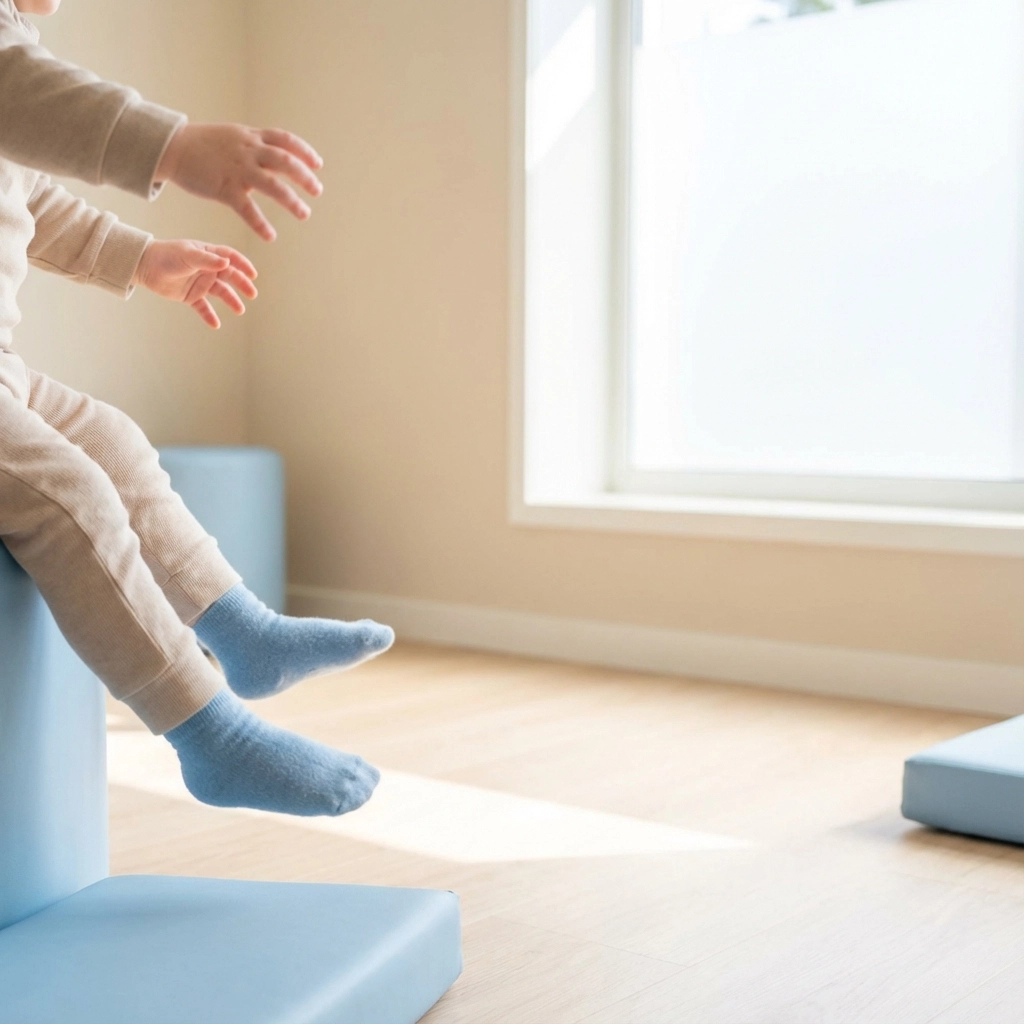
For families watching their child struggle with sports, playground activities, or even basic tasks like getting dressed, these findings offer important context. Motor difficulties aren't always about practice or effort: sometimes there are underlying neurological patterns that need attention.
Learning and Attention Impacts
Perhaps even more significant for families and educators are the connections researchers have found between retained reflexes and learning challenges. Multiple studies have identified strong links that we simply can't ignore.
ADHD and Attention Difficulties
Research from 2004, 2013, and 2012 consistently found that children diagnosed with ADHD had significantly higher levels of reflex retention compared to children without ADHD diagnoses. Specifically, boys aged 7-10 with ADHD showed elevated retention of the Moro, tonic labyrinthine, asymmetrical tonic neck, and symmetrical tonic neck reflexes.
This doesn't mean retained reflexes cause ADHD, but it suggests they may be contributing factors that deserve consideration in comprehensive assessments and intervention planning.
Reading and Literacy Challenges
The research on reading is particularly compelling. Studies show that retention of the asymmetrical tonic neck reflex was predictive of achievements in reading, spelling, and verbal IQ. When researchers compared children with different reading abilities, they found higher levels of asymmetric tonic neck reflex retention in children with lower reading abilities.
This makes sense when you consider that reading requires sophisticated integration of visual tracking, bilateral coordination, and postural control: all areas that can be compromised by retained reflexes.
Broader Sensory and Developmental Issues
Children with retained reflexes often score higher on measures indicating:
Sensory-vestibular disorders
Dyspraxia (difficulty with motor planning)
Postural disorders
Sensory processing differences

What This Means for Families and Professionals
These research findings have profound implications for how we understand and support children with learning and motor challenges. If retained primitive reflexes are present in nearly 90% of preschoolers and are clearly connected to developmental difficulties, we need to be assessing for them routinely.
For parents, this research offers both explanation and hope. If your child struggles with reading, attention, coordination, or sensory processing, retained reflexes might be a piece of the puzzle that's been overlooked. Understanding this connection doesn't diminish your child's efforts or your family's journey: it provides another avenue for support and intervention.
For professionals: teachers, therapists, pediatricians, and developmental specialists: these findings suggest we should be incorporating reflex assessment into our standard evaluations. We can't address what we don't assess, and these reflexes may be foundational to many of the challenges we see in classrooms and therapy sessions.
The Promise of Intervention
Perhaps most encouraging is the research showing that retained reflexes can be addressed. One study demonstrated that a 12-week intervention program significantly reduced the presence of retained primitive reflexes and improved performance on motor and cognitive testing measures.
This tells us that these neurological patterns aren't fixed or permanent. With appropriate intervention, children can develop better integration, leading to improvements in motor skills, attention, and learning capabilities.
The interventions typically involve specific movement patterns and exercises designed to help the nervous system complete the integration process that should have happened naturally in early development. It's gentle, non-invasive work that meets each child exactly where they are in their developmental journey.
Moving Forward with Knowledge and Hope
At SIENS, we believe in the power of understanding the whole child: including the neurological foundations that support learning and development. This research on retained primitive reflexes adds another important layer to that understanding.
If you're a parent wondering whether retained reflexes might be affecting your child, or a professional seeking to provide more comprehensive support, we encourage you to explore this area further. Assessment by qualified practitioners can help identify which reflexes may still be active and guide appropriate intervention strategies.
The prevalence of retained primitive reflexes reminds us that many children are carrying neurological patterns that may be making learning and development more challenging than it needs to be. But it also reminds us that with knowledge, assessment, and appropriate intervention, we can help children access their full potential.
Every child deserves the opportunity to learn, grow, and thrive without unnecessary neurological obstacles standing in their way. Understanding retained primitive reflexes: and addressing them when needed: is one more way we can support that fundamental right.
Stock Photo Suggestions:
Child doing cross-lateral movement exercises or therapeutic activities
Professional conducting reflex assessment with young child
Children engaged in motor activities like balance beams or coordination games
Brain imaging or neural pathway illustration showing primitive reflex integration
Comments